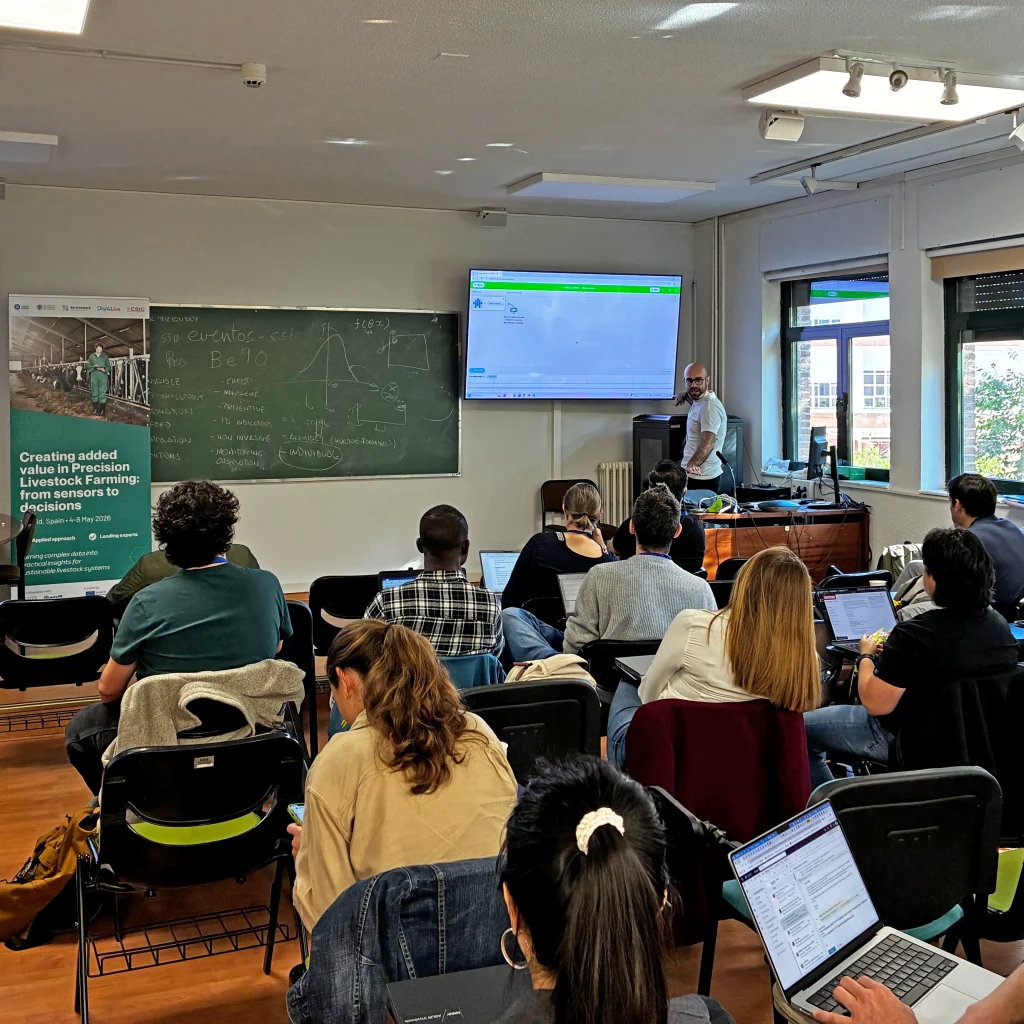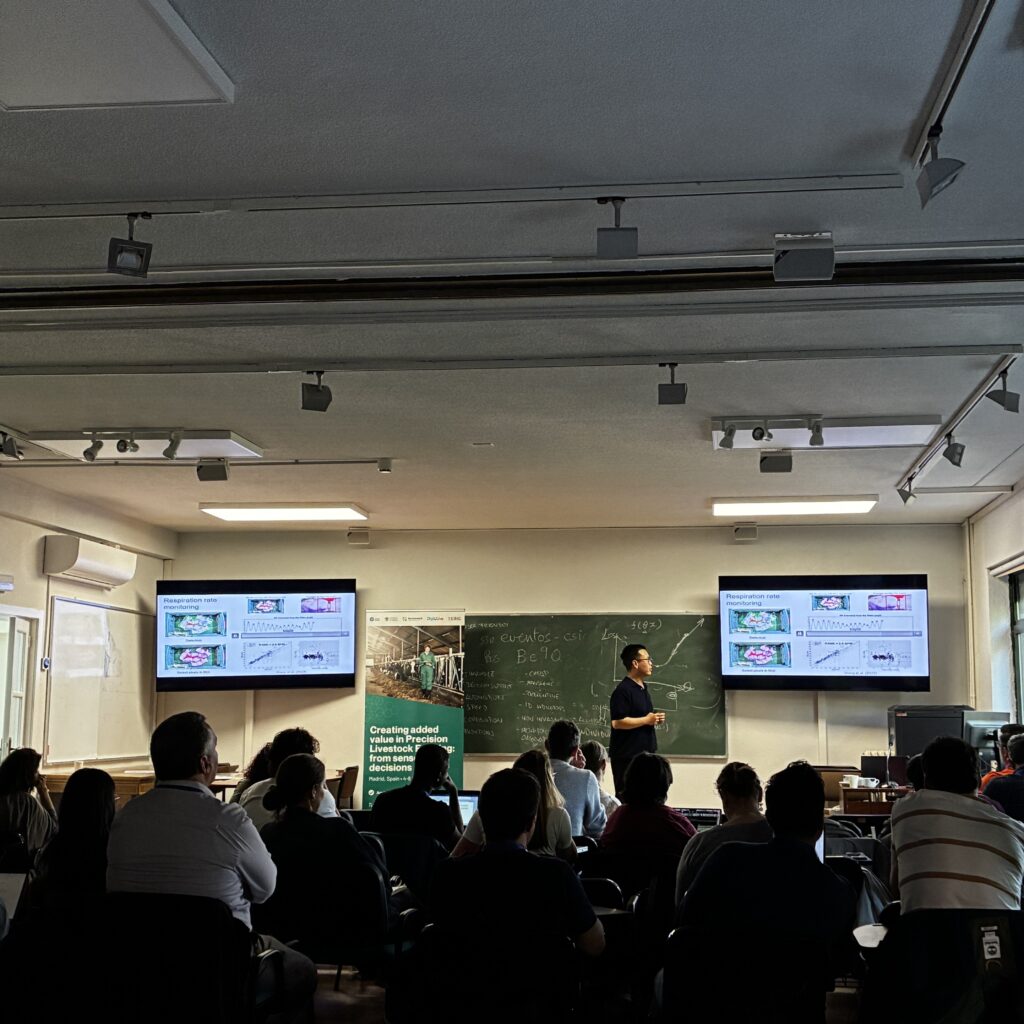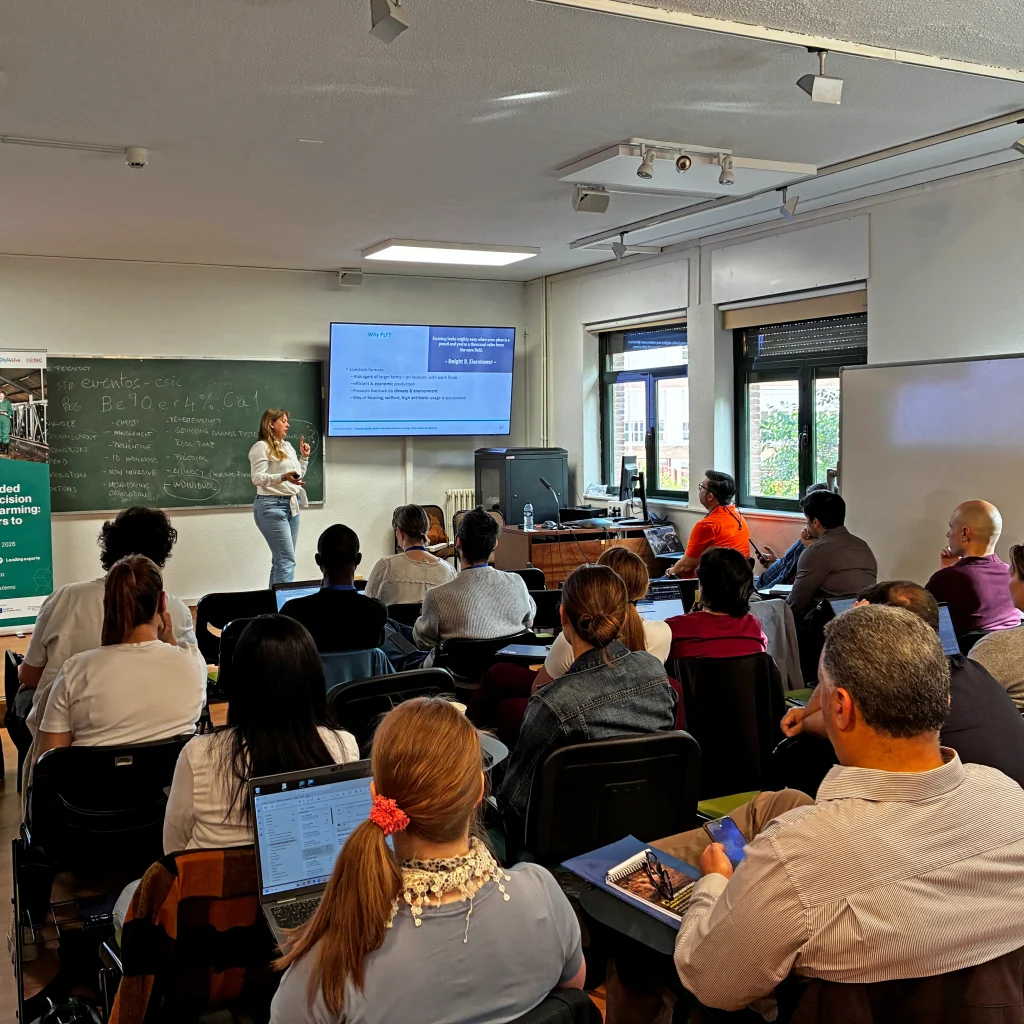
The Advanced Course “Creating Added Value in Precision Livestock Farming: From Sensors to Decisions”, organised within the framework of the Re‑Livestock project, successfully took place in Madrid from 4 to 8 May 2026. The course brought together participants, researchers, professionals and lecturers from more than 30 countries, creating a truly international and multidisciplinary environment for knowledge exchange on the future of digital technologies in livestock farming.
The course was jointly organised by CIHEAM Zaragoza, the Universitat Politècnica de València (UPV), and the Spanish National Research Council (CSIC), with the collaboration of the Horizon Europe Digi4Live project, ILVO, and the COST Action EU‑LI‑PHE. Throughout the week, participants explored how Precision Livestock Farming (PLF) technologies can support more precise, data‑driven and sustainable livestock management.
From sensors to decision‑making
The programme combined theoretical lectures with hands‑on practical activities, case studies, technical visits, and interactive discussions, allowing participants to gain practical experience in data collection, standardisation, analysis and interpretation for decision‑making in livestock production systems. Key topics included digitalisation, advanced monitoring technologies, and their role in improving animal health, welfare, sustainability and farm efficiency.
A central message highlighted throughout the course was that the true value of PLF does not lie in generating more data, but in transforming data into simple, practical and actionable tools that effectively support farmers’ decision‑making. Discussions also addressed current challenges for PLF adoption, including interoperability, data governance, infrastructure limitations, and the need to ensure that digital solutions remain farmer‑oriented and applicable under real farming conditions.
Within this context, Re‑Livestock showcased innovative approaches aimed at supporting more resilient livestock systems, reinforcing the project’s contribution to linking digital innovation with tangible benefits at farm level.
Field visit and knowledge exchange
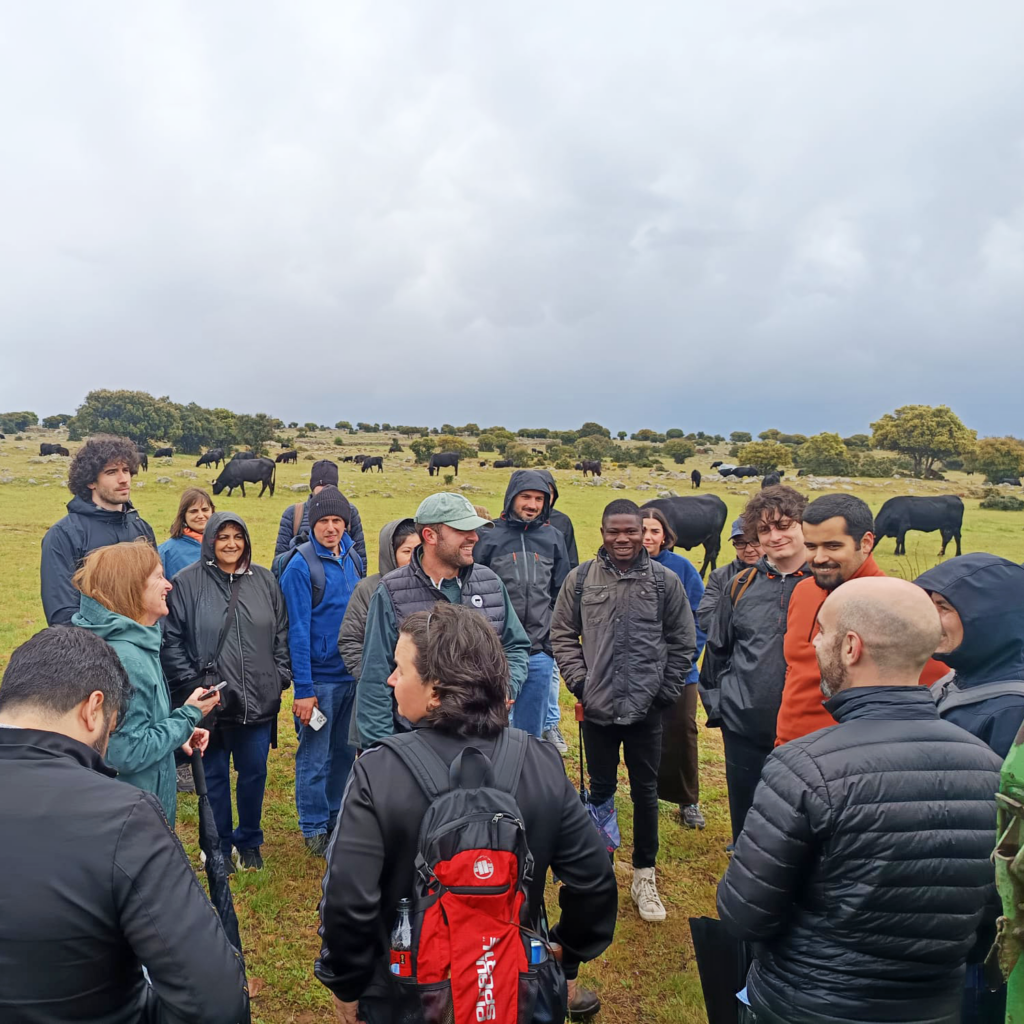
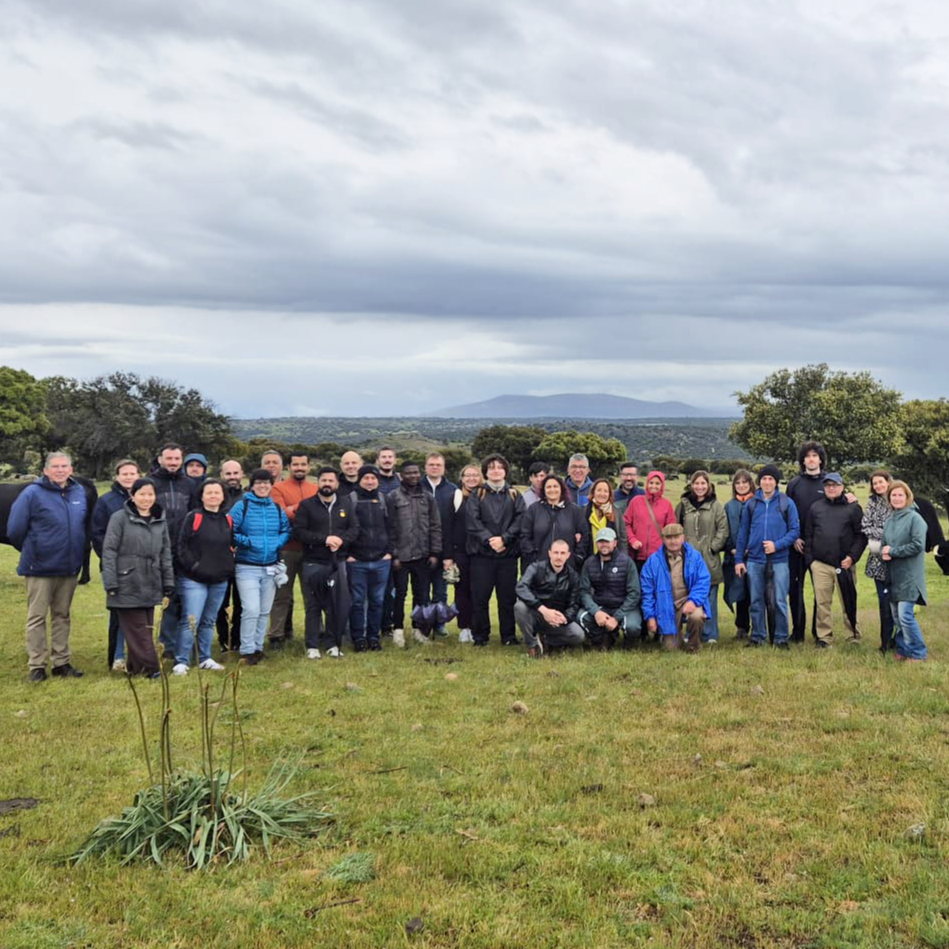
The five‑day programme included a field visit to the National Association of the Avileña Negra Ibérica breed, offering participants from other regions an introduction to Iberian semi‑extensive calf production systems and to the collective facilities used for breed selection. The visit provided valuable insights into the Avila landscape, the practical requirements for breed selection, and the interaction between production, environment and local resources.
This field day proved to be an enriching experience, fostering direct dialogue and cooperation between participants, farmers and association managers. It also supported the creation of new professional networks, helping to identify technological needs and opportunities for the design of PLF tools adapted to different regional and production contexts.
Strengthening collaboration for digital livestock innovation
Overall, the course reinforced the role of Re‑Livestock in promoting collaboration between science, technology developers, farmers and policymakers. By combining technical knowledge with practical experience and international exchange, the Advanced Course contributed to ensuring that digital innovations generate real impact and support the transition towards more sustainable, resilient and efficient livestock farming systems.